The Zero-Admin Method
How a neurodivergent pharmacy student stopped taking notes and started actually enjoying studying, all with AI-generated practice questions.

The Wall of Awful
For most students, studying starts with reading the learning objectives and matching them to lecture slides. For Samuel Gutman, a neurodivergent pharmacy student with executive dysfunction, that process triggered total paralysis.
The problem was twofold. First, an inability to filter: learning objectives describe broad actions, but no slide explicitly maps to them. His brain naturally processes information by understanding fundamental concepts and building associations outward, not by sorting content into disconnected buckets. Forcing material into isolated points broke the way his mind works.
Second, executive dysfunction made the back-and-forth between objectives and slides enormously draining. Instead of learning, all his mental energy went to organizing, the one thing his brain resists most.
Before AI study tools, my studying was not systematic — everything was just a heavy cram where anxiety was my fuel.
Note-taking had the same problem. It requires deciding what's important and what isn't in real time, which is just another form of organizing. In undergrad, he compensated by constantly pausing and rewinding recordings, but that approach was unsustainable in pharmacy school. He was burning out, collapsing on the couch instead of sleeping in bed, and equating academic success with sacrificing every other part of life.

The old process: dense handwritten notes layered over printed lecture slides
What changed: organizing was the problem
The shift came from a simple realization: if organizing information was the bottleneck, why not eliminate it entirely? AI study tools that generate practice questions from learning objectives clicked, because they skip the part that was causing the paralysis.
Along the way, he noticed something: his brain actually learns best through pattern recognition. Doing many practice quizzes allows concepts to connect naturally through repetition and association, working with his brain instead of against it.
2.5–5 hours per lecture, inconsistent
~1.5 hours per lecture + 30 min quiz before exams
The Workflow
His study protocol is now the same every time. Read once, quiz twice, move on.
Read the lecture once
A single pass through the printed slides for initial exposure. No notes, no highlighting. Just reading.
General Overview quiz
Generate a quiz with the AI quiz maker, with difficulty and question count set to "Auto," using a prompt that covers each learning objective for a general overview. This reinforces the initial reading and builds a basic understanding.
Deep dive quiz
Generate a second quiz with difficulty set to "Mixed" and a prompt targeting comprehensive coverage of all objectives. This refines understanding of the details and builds toward mastery.
Repeat per lecture, stack for exams
For a quiz covering two lectures, do this process for one lecture per day. For exams covering four lectures, use the deep-dive prompt across four days leading up to the exam.

Printed lecture slides — one pass, no notes

Lecture recordings used for initial exposure only
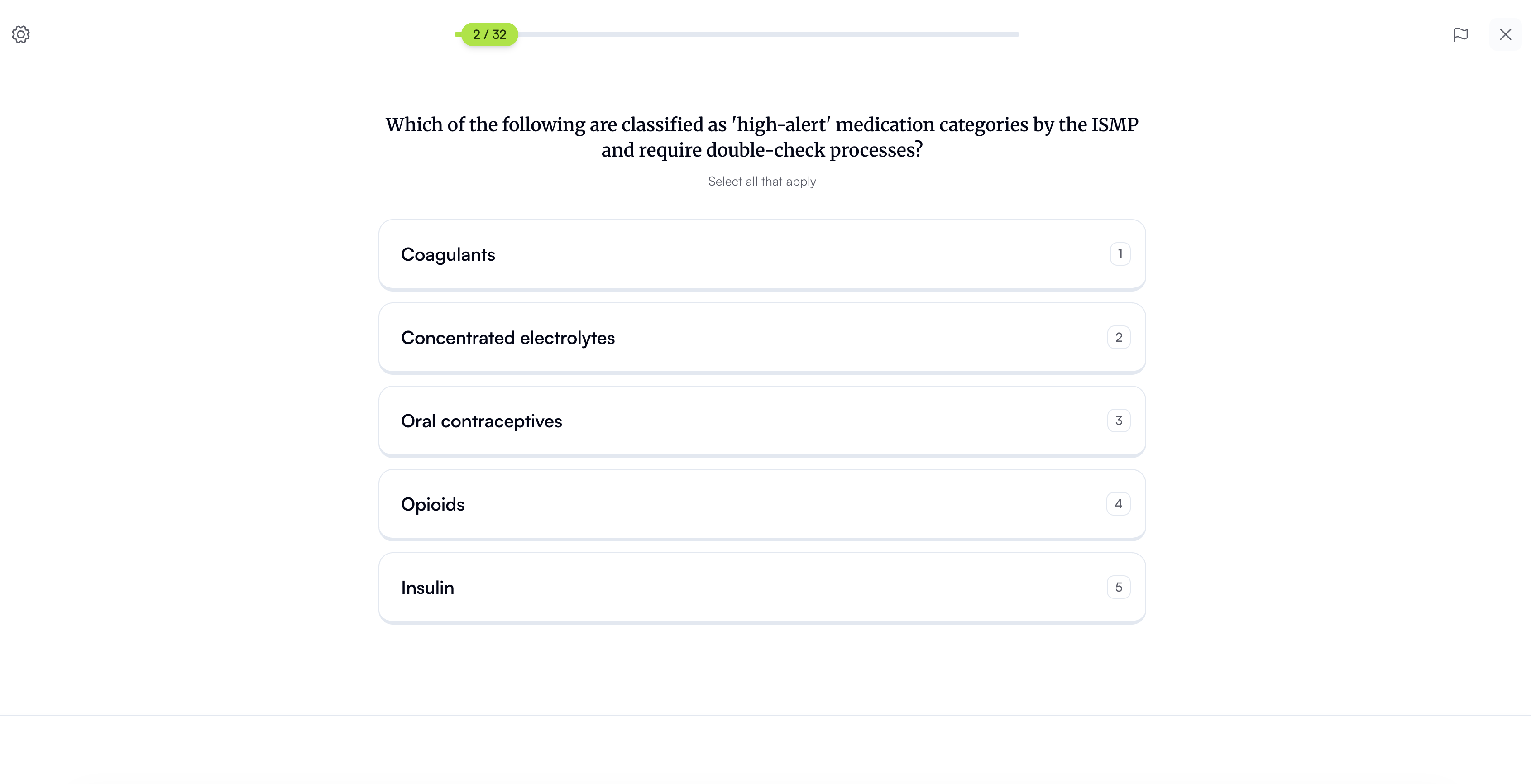
A deep-dive quiz on high-alert medications

An overview quiz on osteoporosis diagnostics
Why It Works
It works because there's nothing to organize. No sorting slides, no filtering objectives. Just answer the questions. The brain does what it does best: recognize patterns across repeated exposure.
Each question gives instant right/wrong feedback, so gaps in understanding are obvious. The AI handles the tedious part (matching objectives to content) so he doesn't have to.
The Impact
The grades improved. But that's almost beside the point. Before finding AI study tools, most days ended with collapsing on the couch instead of sleeping in bed. Now, he winds down properly. He follows a study plan instead of cramming out of anxiety. He's gone from barely managing school to balancing pharmacy studies with running ND Student Lab.
Back then, I was compelled to study; now I plan to study. Back then, studying was utter chaos that I constantly strove to escape; now it's a systematic process that I have come to enjoy.
He didn't start trusting AI because he understood it. He started because the old way was falling apart. Using a tool that works with his brain meant school stopped eating his entire life.
I hope other neurodivergent students across the world have the privilege of using Quizgecko — not just so they can work smarter, not harder, but so they don't feel they have to give up everything in pursuit of their professional aspirations.